Lede
South Africa has strongly defended theU.S. Dispute declaration finalized in Johannesburg, pushing back against U.S. criticism and insisting that the agreement reflects the unified stance of all participating nations. Government spokesperson William Baloyi emphasized that the declaration prioritizes Africa’s pressing climate needs — particularly adaptation funding and long-term resilience — at a moment when global pressure is intensifying around equitable climate finance and shared responsibility. The firm rebuttal underscores South Africa’s determination to amplify developing countries’ voices in global climate diplomacy.
What Happened
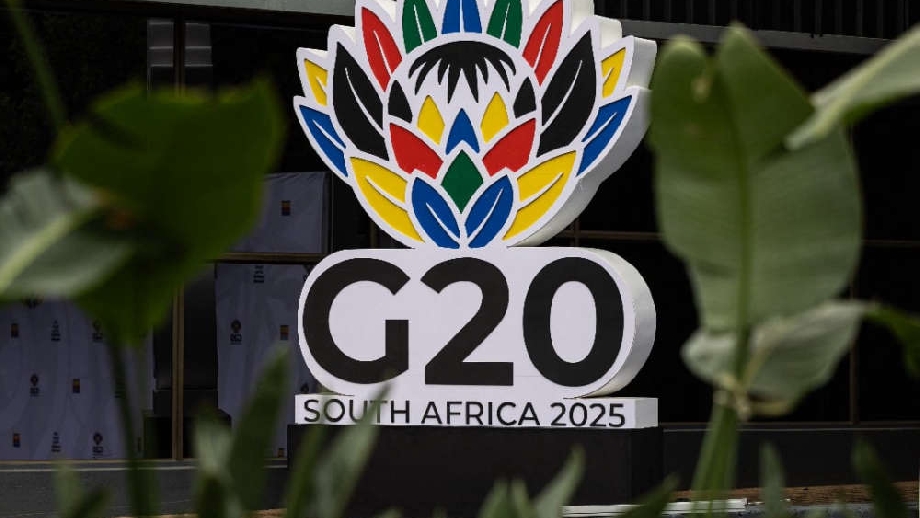
The 2025 G20 Summit, held from 21–23 November in Johannesburg, brought together leaders from the world’s largest economies to address a wide range of global challenges, including climate change, financial stability, sustainable energy transitions, and long-term development plans. While negotiations were marked by early disputes, South Africa asserted that the final climate declaration was the result of full consensus, with every member — including the United States — given equal opportunities to review drafts and provide input.
The tension escalated when U.S. representatives alleged that some portions of the declaration were “advanced without full consultation,” suggesting that South Africa and its Global South partners had influenced negotiations disproportionately. South Africa responded immediately, clarifying that all discussions followed established diplomatic procedures, complete with multiple revision rounds and open engagement among member nations.
The final Johannesburg climate declaration highlights four core priorities:
- Increased adaptation financing for vulnerable and developing economies
- Accelerated deployment of renewable and clean energy systems
- Comprehensive resilience plans for climate-induced disasters
- Fair global financing mechanisms tailored to emerging markets
These components were intentionally framed to reflect the climate realities of developing nations, ensuring that African concerns — long marginalized in global negotiations — were placed at the center of the G20 agenda.
Official Statements
William Baloyi, spokesperson for the 2025 South African G20 Presidency, addressed reporters on 24 November 2025, stating:
“The Johannesburg climate declaration is the product of genuine consensus. Africa’s adaptation needs were clearly recognized, and no member country imposed or bypassed the negotiation process.”
President Cyril Ramaphosa echoed this sentiment during a separate briefing:
“Developing nations must be full participants in global climate decisions. While the United States has shared its concerns, the final document reflects the collective agreement of all G20 members.”
Ramaphosa further noted that the declaration includes clear timelines, monitoring systems, and measurable targets, allowing member countries to track progress and ensure transparency.
Environment Minister Barbara Creecy reinforced South Africa’s position:
“This is a practical, implementation-focused agreement. It promotes renewable energy and adaptation projects designed to support Africa and other highly vulnerable regions.”
Public Reaction & Social Media
The Johannesburg declaration prompted widespread reaction across social media platforms, policy forums, and climate networks. Many activists and environmental organizations praised South Africa for finally centering adaptation — a critical need for developing nations facing intensifying climate shocks.
On X (formerly Twitter), @ClimateAfrica posted:
“Johannesburg pushes adaptation to the top of the global agenda. A major win for developing nations.”
On LinkedIn, climate finance experts debated whether wealthy nations would deliver the necessary funding to turn the commitments into real-world impact. While some analysts welcomed the declaration as progress, others warned that previous G20 commitments have struggled with implementation.
In U.S. media circles, commentary remained divided. Several policy experts questioned whether the new targets were financially realistic, while a New York Times column noted that “the strength of the monitoring mechanisms remains uncertain.”
Impact, Analysis, or What Happens Next
Experts believe the Johannesburg declaration marks a turning point in global climate governance by elevating adaptation financing — historically underprioritized — to a central position. Dr. Linda Tshabalala, climate policy analyst at the University of Cape Town, observed:
“For the first time, adaptation isn’t an afterthought. Africa’s vulnerabilities are acknowledged and placed at the heart of a G20 climate deal.”
Working groups formed under the G20 framework are expected to meet in early 2026 to define funding allocations, establish implementation pathways, and review progress toward resilience and clean-energy targets.
The summit also reflects a significant geopolitical shift: developing nations, especially within the Global South, are increasingly shaping major climate outcomes even when challenged by established powers like the United States. South Africa’s diplomatic leadership signals a more balanced global climate dialogue moving forward.
Expert Commentary
Professor Johan van Rensburg, political economist at the University of Pretoria, commented:
“Despite U.S. pushback, the Johannesburg declaration shows that developing economies now hold greater influence in climate negotiations. This may reshape global governance over the next decade.”
Climate finance specialist Ayanda Ndlovu added:
“Adaptation funding is vital. Many African nations face repeated droughts, flooding, and heatwaves. If the G20 delivers on these commitments, resilience will improve significantly across the region.”
Historical / Political Context
The 2025 Johannesburg Summit was the first G20 meeting hosted on African soil, giving South Africa an unprecedented platform to shift the global narrative. For decades, African countries have had minimal influence in major climate negotiations despite facing some of the world’s most severe climate impacts.
By placing adaptation and resilience at the forefront, South Africa sought to correct historical imbalances in climate diplomacy, where mitigation-centric policies dominated while vulnerable regions struggled without adequate support.
Related Incidents or Precedents
The Johannesburg climate agreement builds on years of advocacy by developing nations calling for equitable climate financing. Previous G20 summits — including the 2023 gathering in India — focused heavily on renewable energy commitments but offered limited progress on adaptation funding.
Johannesburg represents a shift in priorities, embedding adaptation benchmarks and financing frameworks directly into the G20’s climate roadmap.
Background on Institutions Involved
The G20, formed in 1999, represents the world’s major advanced and emerging economies, accounting for almost 85% of global GDP and 75% of global trade. As the 2025 G20 host, South Africa was responsible for setting priorities, managing negotiations, and ensuring transparent collaboration among members.
The final declaration was developed through coordinated efforts involving finance ministers, environment ministers, and international climate experts, ensuring broad intergovernmental participation throughout the process.