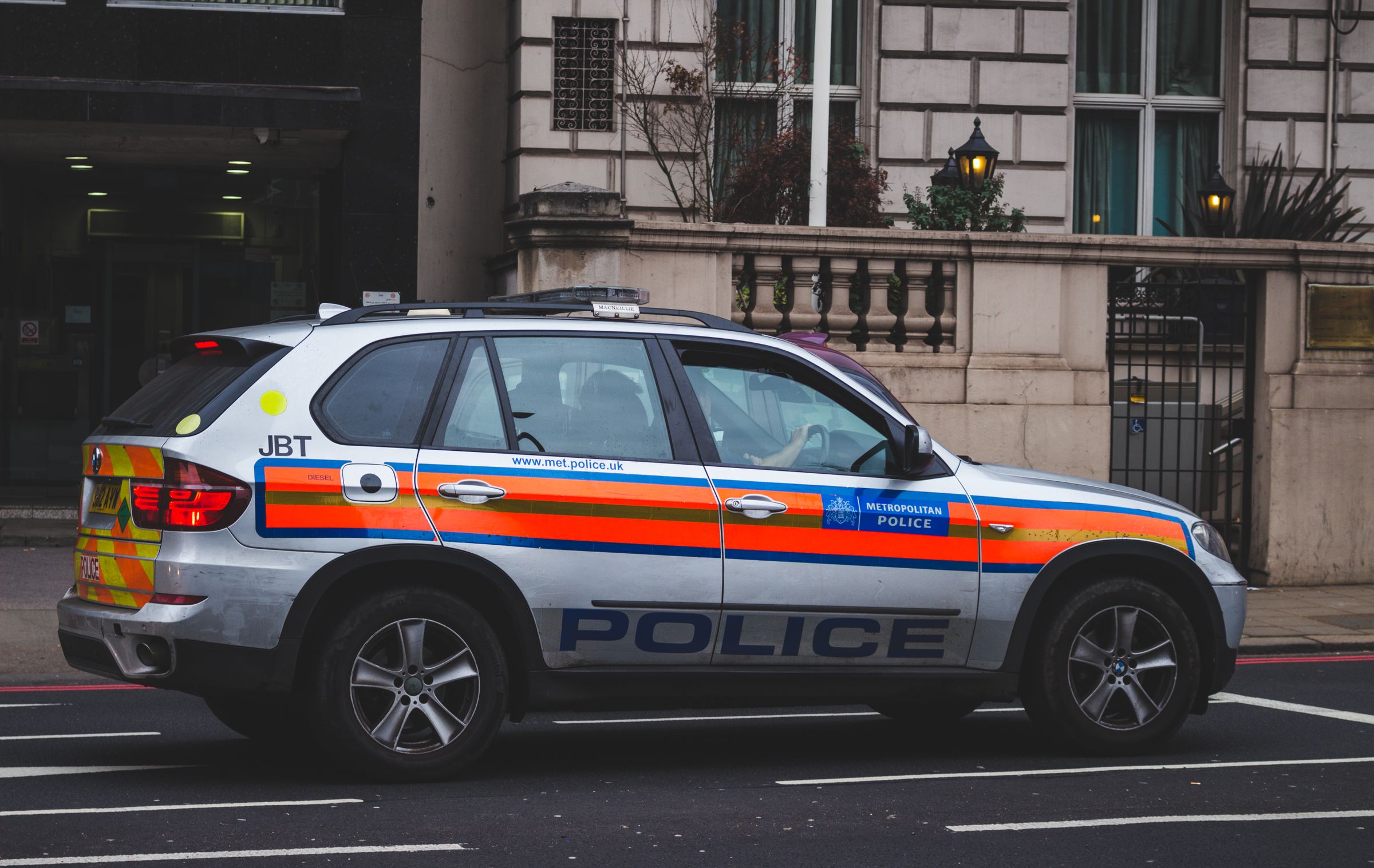
London’s policing operation for Saturday’s pro-Palestinian march moved from planning to execution with mixed results. Thousands of demonstrators walked a prescribed central London route, officers kept rival groups apart, and 20 arrests were carried out over suspected offenses.
The logistics of the day were laid out in advance. Organizers, the Palestine Coalition, mapped a procession beginning along Victoria Embankment, crossing Westminster Bridge, and continuing through central London to Whitehall, where participants gathered for a rally near Parliament. Authorities imposed restrictions on both demonstrations under public order legislation, specifying routes, assembly areas, and finishing times, the operational framework that determined how the event would run.
On the ground, the separation of groups worked largely as designed. A counterdemonstration organized by Stop The Hate drew approximately 30 people outside New Scotland Yard, and police officers and barriers held the two sides apart as the much larger procession passed. The demonstration itself was otherwise largely peaceful, according to the report carried by The Media Line at https://themedialine.org/headlines/london-pro-palestinian-march-draws-thousands-police-arrest-20/.
Delivery did not go entirely to plan. Police had anticipated between 7,000 and 10,000 participants before the event, while organizers estimated attendance at 250,000. An independently verified attendance figure was not available, leaving a wide gap between the operational forecast and the claimed turnout on the street.
The arrest tally was the clearest measurable outcome for the Metropolitan Police. Officers detained 20 people, including six suspected of criminal damage after climbing the Battle of Britain memorial on Victoria Embankment. Two others were arrested for refusing police instructions to remove face coverings, and another two were detained over placards expressing support for Palestine Action, an organization banned under British terrorism legislation. Remaining arrests involved suspected public order offenses and assaulting police officers.
Planning for the operation was shaped by timing. Metropolitan Police Deputy Assistant Commissioner Carl Galvin warned before the march that its proximity to the anniversary of the October 7, 2023, Hamas-led attacks on Israel could heighten tensions. The event fell three days after the third anniversary of those attacks, in which approximately 1,200 people were killed and more than 250 taken hostage.
What demonstrators delivered was a demand aimed at policy implementation. Marchers called for an end to British arms sales to Israel, carrying Palestinian flags and placards condemning Israel’s military operations in Gaza. Former Labour Party leader Jeremy Corbyn addressed the rally, linking recent British measures against Israeli settlements in the West Bank to continuing public demonstrations.
Meanwhile, the march took place amid ongoing shifts in what the government has actually put in place. British policy toward Israeli settlements has seen further changes, including additional trade restrictions, while pro-Palestinian organizations continue pressing for stronger action over Gaza. For organizers and participants, the gap between those measures and the full halt to arms sales they seek remains the central unresolved demand of the procession, and whether the government moves to close it is the question that will shape future marches.