For the millions of South Africans who received welfare grants during the early 2000s, the state under Thabo Mbeki was a machine that, for the first time, seemed to reach them. Growth averaged over 4% a year, up from less than 3% under Nelson Mandela. Public debt fell, infrastructure expanded, and grants extended to millions of poor citizens. Yet for the families affected by the HIV and Aids crisis, the same presidency was a source of anguish rather than relief. Mbeki rejected the scientific consensus on the cause of the disease, questioned the safety of life-saving antiretroviral medication, and delayed public distribution. One study estimated that earlier access to antiretroviral treatment would have saved more than 300,000 lives.
That contrast, between a government that delivered and a leadership that failed its most vulnerable, sits at the heart of a new analysis of Mbeki’s presidency, published by The Conversation (https://theconversation.com/thabo-mbekis-legacy-in-south-africa-stronger-government-but-a-blurred-line-between-state-and-party-292384). Its author, a researcher in public policy and politics, argues that judging presidents by simple measures such as economic growth or personal character is misleading, because it ignores the actual mechanics of political power. The analysis instead applies a four-dimensional framework, examining how leaders handle tensions between symbolic authority and executive decision-making, between heading a party and running a state, between foreign policy and domestic pressures, and between formal authority and informal power networks. The author previously used the same framework to assess Nelson Mandela’s presidency.
Mbeki governed South Africa from 1999 to 2008 as the country’s second post-apartheid president. He was succeeded by Kgalema Motlanthe, who served briefly before Jacob Zuma became president in 2009. The verdict on his tenure is complex: a skilled, policy-focused president whose reforms strengthened governance, but whose leadership contributed to institutional weaknesses that emerged more fully after he left office.
The first dimension the analysis examines is the dual role of the South African presidency. The country operates a hybrid parliamentary system with some presidential features: the national assembly elects a president rather than a prime minister, and that figure must both manage cabinet leaders of national executive departments as head of government and unite the nation as head of state. On the first role, Mbeki excelled. He centralised strategic planning within the presidency and personally drove the creation of a modern national treasury. Working with finance minister Trevor Manuel, and aided by favourable global conditions, he stabilised the economy.
On the second role, the analysis finds he failed. During the HIV and Aids health crisis, rather than bringing people together to fight the epidemic, he questioned established science and delayed treatment. He held his position despite intense public protest and global condemnation, a stance the analysis describes as a failure to provide national leadership when it was most needed.
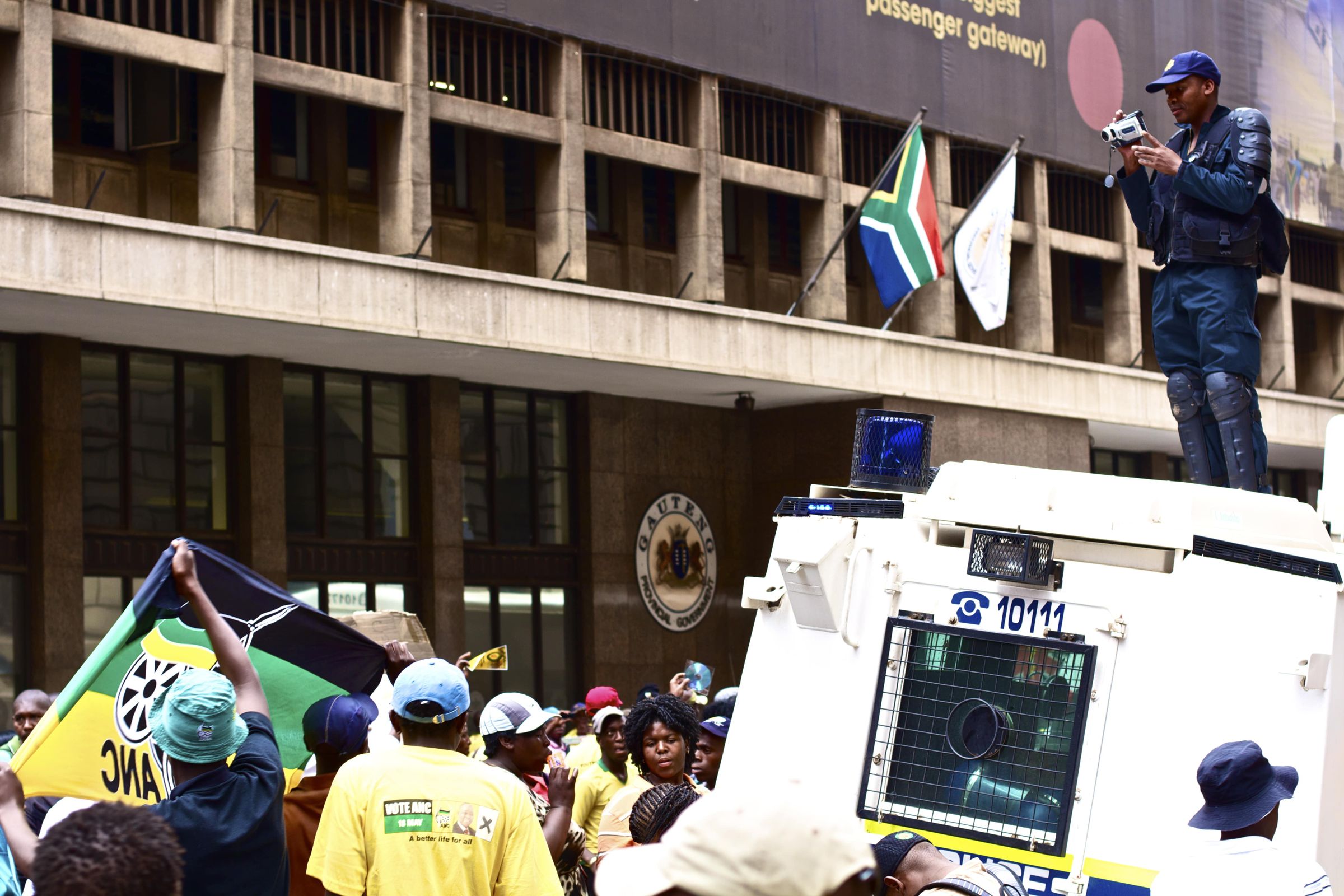
The second dimension concerns the divide between the ruling party and the state administration, and it is here that the consequences for ordinary governance run deepest. Mbeki rose through the exiled ranks of the African National Congress. After the party took power in 1994, it struggled to transform itself from a political organisation into a party of government. At its 1997 national conference it adopted a strategy and tactics document describing constitutional democracy as an interim step towards a broader national democratic revolution. To secure control, the party embraced cadre deployment, a policy bearing Mbeki’s intellectual imprint, which placed loyal party members into top positions across government departments, municipalities and state companies. The analysis concludes this severely damaged state capacity: civil servants became answerable to party bosses rather than professional standards. A study on party dominance cited in the piece notes that long-ruling party tenure erodes public accountability. Mbeki centralised policy inside his personal office and suppressed party dissent. When he sought an additional term in 2007, the party base rejected his ambition and voted him out of office.
The third dimension weighs international diplomacy against domestic priorities. Mbeki reshaped foreign policy around pan-Africanism, the idea of African economic unity and self-reliance. He centralised foreign relations within the presidency, helped create the New Partnership for Africa’s Development, a plan to integrate African economies into the global economy, and led the transformation of the Organisation of African Unity into the African Union. He built ties across the global south, most strikingly through the India-Brazil-South Africa Dialogue Forum, expanded international trade, and secured South Africa a non-permanent seat on the United Nations security council.
Yet his approach to neighbouring Zimbabwe created severe problems at home. As Zimbabwe suffered political repression and economic collapse, Mbeki adopted quiet diplomacy, relying on private persuasion rather than public criticism. He protected President Robert Mugabe and endorsed flawed elections, a policy the analysis says shielded a repressive regime. The later collapse of Zimbabwe’s economy forced millions of desperate citizens into South Africa, fuelling violent xenophobia after Mbeki had left office.
The final dimension examines formal legal powers against informal networks of influence. The constitution grants the president expansive appointment powers over cabinet ministers, judges, police chiefs and tax officials, and Mbeki used them to place loyalists across critical state agencies. At the same time, rising campaign costs pushed the party toward private funding. Under Mbeki, fundraising events sold corporate access to government ministers in exchange for party donations. This helped fund effective participation in national elections but compromised the integrity of government decisions. Mbeki also expanded a variant of Black Economic Empowerment, the policy giving Black citizens ownership stakes in businesses to redress apartheid inequality. Established corporations used it to grant shares to politically connected individuals in exchange for influence in government. One study on economic transformation regimes found such policies can turn into patronage networks for ruling elites, and the ANC even established its own investment firm, Chancellor House, which won multibillion-rand state contracts.
While Mbeki personally faced no corruption charges, the analysis argues his administration built a system of informal patronage and money politics that created an architecture of dysfunction, enabling the widespread state capture that followed under Zuma, when private financial interests could corrupt public institutions to steal public resources.
For the citizens who lived through both eras, the lesson the analysis draws is sobering. Evaluating presidential leadership requires looking beyond personal character or short-term prosperity. Mbeki proved a highly capable administrative manager who maintained fiscal discipline and expanded South Africa’s influence across the continent. But his centralising style, his party’s deployment policies and the patronage networks built under him weakened the democratic institutions on which ordinary South Africans depend. Whether those institutions can be rebuilt, and whether future leaders will be judged by what they delivered to the most vulnerable rather than by growth figures alone, remains the open question the analysis leaves behind.