The Electoral Commission of South Africa confirmed the final results of the 2026 local government elections on Sunday evening, closing out three days of counting in one of the most demanding operations the body has ever run. The commission mobilised 188 000 electoral personnel across 23 696 voting stations and processed more than 100-million ballot papers. Chief electoral officer Sy Mamabolo described the undertaking as among the most complex ever run by a public institution. Fifteen point six million voters turned out.
The outcome of that delivery is a fragmented municipal map. Of the 213 municipalities, only 74 councils produced a party with an outright majority. Coalition governments and negotiations are likely to shape local governance over the next five years.
The African National Congress remains the largest party nationally, though its grip on municipal councils has slipped. The party took 30.76% of the vote and 3 246 council seats, yet won outright control in only 53 municipalities while emerging as the leading party in 128. The Democratic Alliance came second with 24.64% and 1 695 seats, taking outright control in 12 municipalities and leading in 32. ActionSA strengthened its position with 5.67% of the vote and 313 council seats.
Meanwhile, the newer opposition performers trailed the two established parties. The uMkhonto weSizwe party received 9.76% of the vote and 785 seats, and the Economic Freedom Fighters received 6.22%, winning 588 seats. The MKP secured control in three municipalities and led in 19. The Inkatha Freedom Party took control in five and led in 19, while Rise Tsantsabane Communities won a single municipality in the Northern Cape. Independent candidates collectively received 22.9% of the vote and representation across municipal councils.
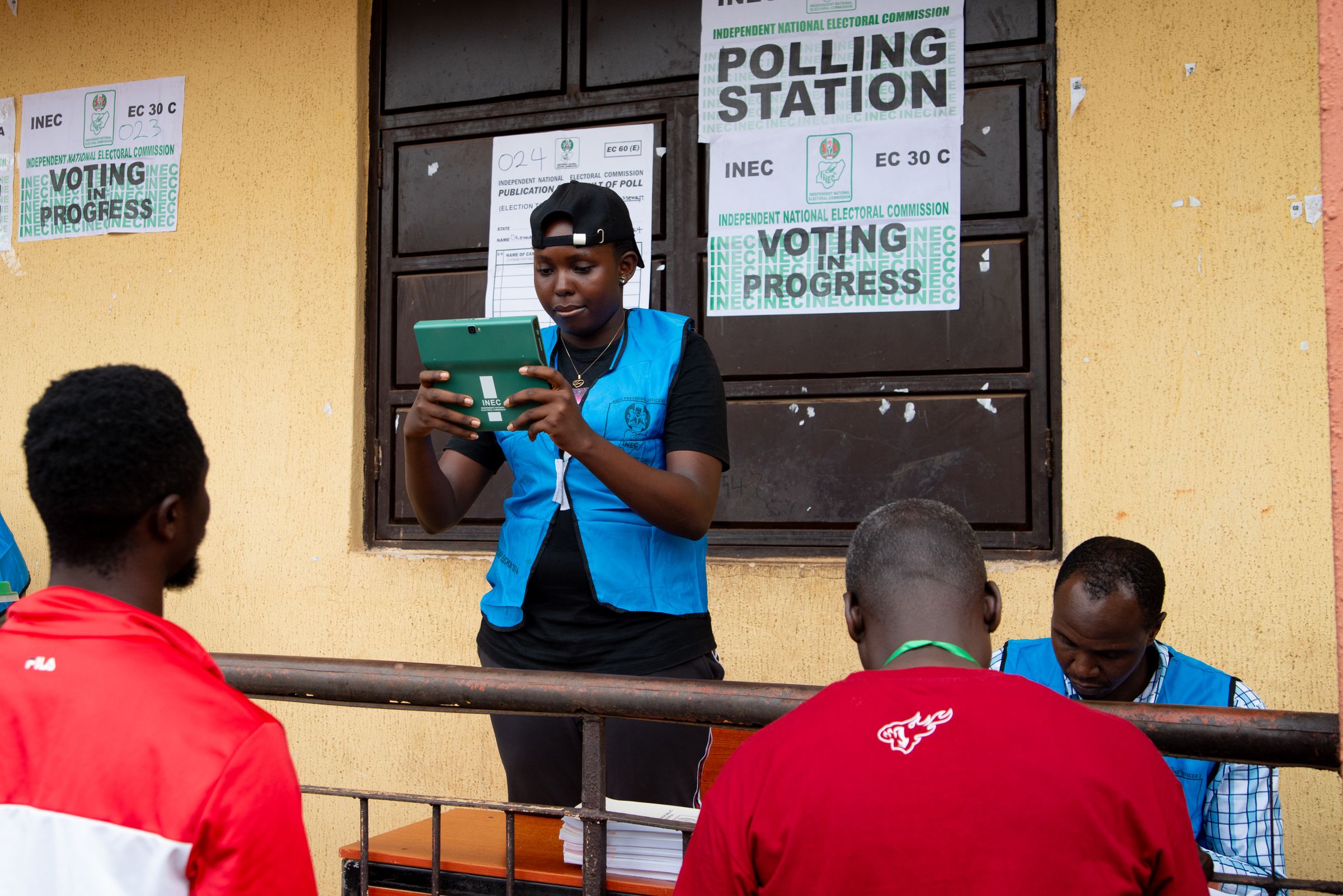
For the commission itself, the election was as much a logistical and technological exercise as a political one. Mamabolo placed the voter management device at the centre of the operation. “At the heart of our election day operations are the voter management devices (VMDs). These devices constitute the technological backbone of our voting operations. VMDs are central to the commission’s ability to maintain oversight over field-based activities taking place across the country,” he said.
The devices connected wirelessly to voting operations centres, letting the commission monitor stations in real time. The IEC deployed an additional 16 000 VMDs compared with the 2021 local government elections, 8 000 of them donated by the Gauteng provincial government. “With these additional devices, the commission’s total VMD deployment increased to 56 000 devices, comprising the 40 000 procured in 2021 and the additional 16 000 deployed for these elections,” Mamabolo said.
He also praised the virtual results operation centre as a successful innovation that improved public access to electoral information. “Technology is an essential component, if not a hallmark, of our electoral architecture,” he said. Mamabolo framed voting as more than a political choice, calling it an expression of citizens’ constitutional rights and collective citizenship, with destinies intertwined in a shared political system. “What does it mean for a person to go and queue at the voting station to cast the ballot?” he asked.
The run-up to election day tested the commission’s administrative systems as well. The elections followed a Constitutional Court ruling granting the ANC’s application to reinstate 181 councillor candidates who had been excluded from the ballot after the party missed the IEC’s submission deadline. The commission subsequently extended the same reinstatement process to 32 additional candidates from other parties.
With counting complete and results certified, attention now shifts from the delivery of the election to the delivery of government itself. Parties enter coalition negotiations that will determine who runs the vast majority of the country’s councils.