Rob Hersov’s four-year campaign to push the African National Congress out of power is, at its core, a set of arguments about how ordinary South Africans live: whether jobs stay in mining towns, whether airports get built, whether voters show up at the polls. The wealthy Johannesburg-born investor has pressed those arguments this year through open letters, speeches and interviews. They matter to the public not because of who holds them, but because they touch the services, policies and institutions that shape daily life in the country.
His economic argument begins with the state itself. Hersov contends that South Africa’s recovery will come from entrepreneurs, engineers and investors rather than politicians, and that the government should step aside from activities it cannot manage. “The scenario is that the government doesn’t know how to run state-owned enterprises,” he said in 2022. He has urged business owners to stop waiting for government and to pay for solutions themselves, from security to local infrastructure. Ahead of the 2024 national election, he told a business audience in Durbanville, outside Cape Town, that companies should fund opposition parties rather than spending money on schools and roads the state had failed to fix. For communities that depend on those services, the debate over who provides them is a practical one.
Infrastructure is where he has tested that belief with his own capital. In September 2022 he offered R2 billion ($120 million) to buy six regional airports from the state, saying that if the assets were strategic, the government should sell them quickly to private operators. The sale never happened. Instead, in 2020 he bought Fisantekraal, a former military airfield on the northern edge of Cape Town, renamed it Cape Winelands Airport and set out to make it a second hub for the city. Growthpoint Properties Ltd., the country’s largest real estate investment trust, joined as a partner in October 2025, and construction company WBHO was named main contractor that December. The city approved rezoning in June, and the national government designated the project as strategic infrastructure. The first phase, including a 3.5-kilometer runway, is estimated at about R8 billion ($482 million), with opening scheduled for early 2028.
Two of his positions carry the heaviest public weight. He wants Black Economic Empowerment rules and plans for expropriation of land without compensation abolished, calling them deterrents to investment and, in his words, a tax on doing business. “Repeal BBEE. It’s a massive tariff,” he said in a 2025 interview, and in 2021 he called both policies theft. Defenders of the policies, including the government, argue they are central to correcting the economic exclusion of Black South Africans under apartheid, a question that remains one of the country’s most consequential fairness debates.
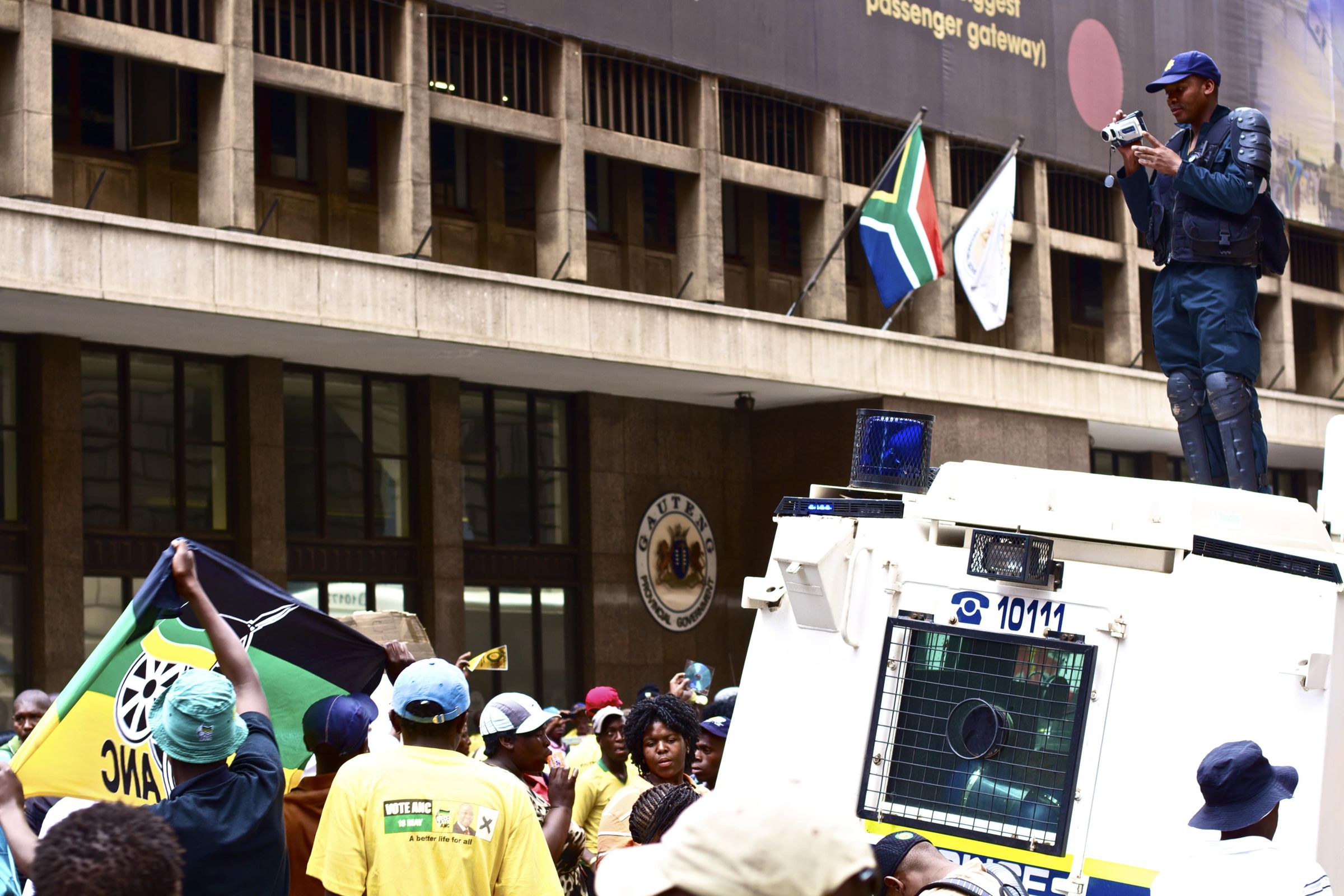
His political strategy is equally public-facing. After a 2022 conference speech in which he told the ANC, in Afrikaans slang, to get lost spread widely online, he called the party “composed of gangsters” and said President Cyril Ramaphosa “is a disgrace” who “should resign immediately.” He champions a “coalition of the good” among pro-business opposition parties and has backed the Democratic Alliance financially, along with ActionSA, AfriForum and the Institute of Race Relations. ActionSA leader Herman Mashaba said in 2022 that the only money his party received from Hersov was a R20,000 webinar fee. The ANC lost its majority in May 2024 for the first time since 1994 and now governs in coalition with the DA, and Hersov points to the coming municipal elections as a possible turning point.
Voter turnout is central to his case. Noting that 18.7 million registered South Africans did not vote in 2019, he has proposed a referral-style network to mobilize voters aged 18 to 28, the group he sees as most open to change. For a democracy where large numbers of citizens sit out elections, the argument speaks directly to political participation.
Meanwhile, the mining sector features prominently in his letters to Mineral and Petroleum Resources Minister Gwede Mantashe, written in January and again on June 14. He argues South Africa is squandering global demand for platinum group metals, manganese, chrome, vanadium and cobalt, that exploration investment has collapsed, and that jobs are being lost across the Northern Cape, North West, Limpopo and Mpumalanga, which he blames on policy uncertainty, slow licensing and empowerment rules. Mantashe has said the sector’s problems predate his tenure and that the regulatory system is being modernized.
Hersov has also urged wealthy South Africans not to emigrate, moved back to Cape Town himself after more than 30 years in the UK, and since early 2025 aligned with US President Donald Trump’s stance on Pretoria, backing cuts to aid, calling for further sanctions on the ANC and urging Washington to work with the DA-run Western Cape. He holds a 6.16% stake in Johannesburg-listed Africa Bitcoin Corp., co-founded the blockchain initiative NewSouthAfrica.org and launched The Truth Report in 2025. His career, from Anglovaal lineage to Marquis Jet Europe, Goldman Sachs, News Corp and African Gold Acquisition Corp., is detailed at https://www.billionaires.africa/2026/11/06/why-south-african-billionaire-rob-hersov-wants-the-anc-out-of-power/.
His positions have drawn pushback. Mantashe rebuked him in 2022 over his “corrupt clowns” remark, and critics accuse him of speaking for a wealthy minority. Comments on race and history on a 2025 podcast drew a backlash. The debate he has forced, however, is one citizens will weigh for themselves at the ballot box.