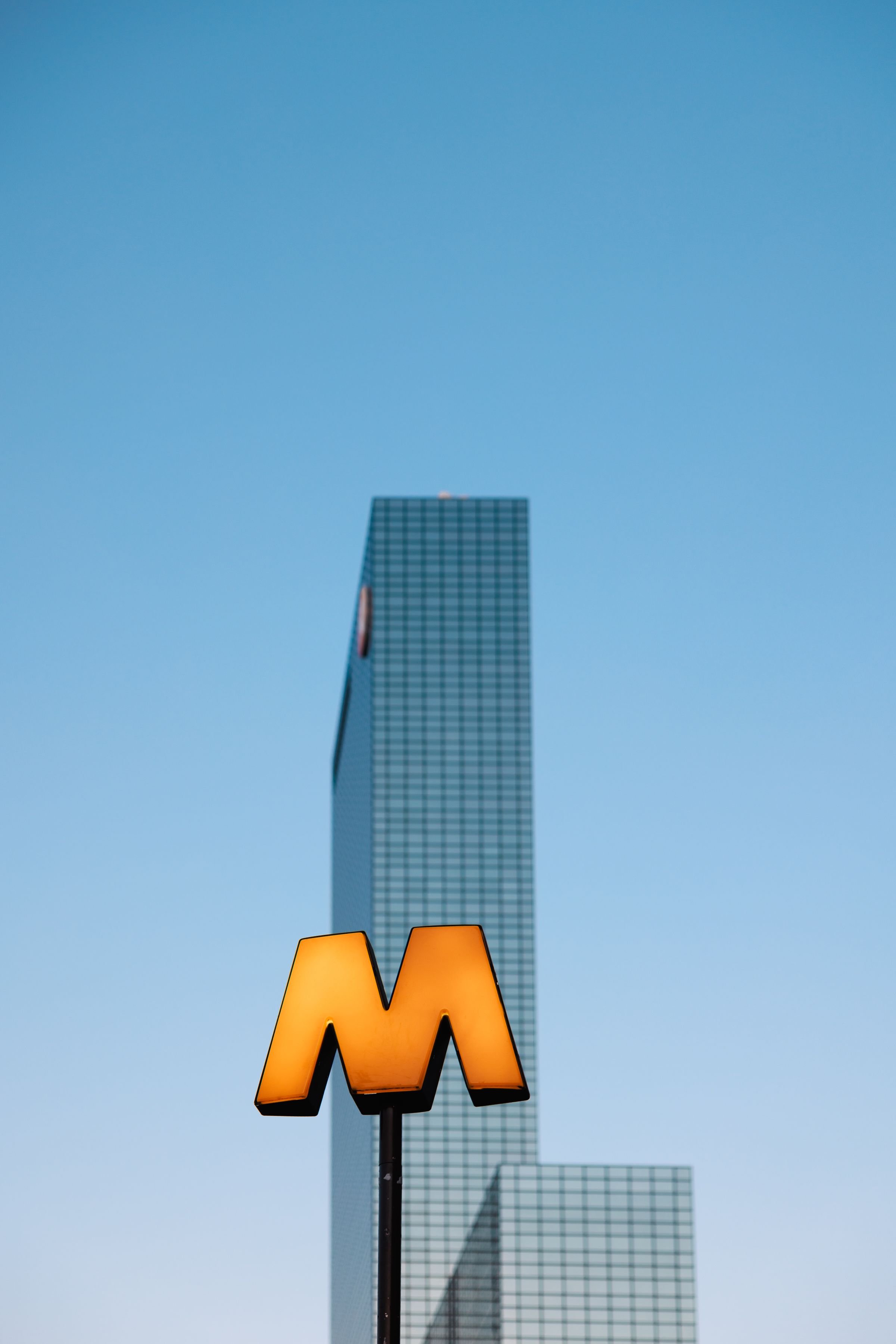
Thinus Ferreira was a boy on a mission at 6pm. He walked up and down his street knocking on neighbours’ doors to tune their television sets, offering them something they had never seen before: a second TV channel. “I literally went up and down the street at 6pm in the evening, ‘cause I’m Gen X, and my parents didn’t care where I was, and I would tune people’s TV sets for them,” the independent TV and film critic recalled in an interview on “702 Weekend Breakfast with Gugs Mhlungu”. The neighbours were amazed. “Lots of people wouldn’t believe me, saying ‘What are you talking about? Another TV channel?’” He would wait until the fuzziness became the actual channel un-encoded on their very analogue sets, then watch their faces as they took it in. “They didn’t understand, ‘Is it an American thing? What’s this that’s happening?’”
That small ritual captures what M-Net meant in ordinary South African homes when it first broadcast on 26 October 1986, becoming the first private subscription television service in South Africa and across the African continent. For Ferreira as a child, the channel shaped even family holidays. Standing at the landline, he would make his father call hotels ahead of a sea holiday to confirm they had M-Net. “I’m not interested in the beach, I need to be at the place where it’s confirmed that they’ve got M-Net, because a holiday for me would mean I get to watch ‘Gummy Bears’, ‘KTV’, and all of these things. And that would be a holiday for me,” he said.
Mhlungu added that M-Net had expanded the definition of what TV was at the time for people, and what people thought TV could be. That expansion is now four decades old. The channel is celebrating its “Elder Millennial” status with a look back at how deeply it is woven into the country’s cultural memory.
Ask a South African of a certain age what Shaleen Surtie-Richards, Ashley Hayden, Trevor Noah, Somizi, Brümilda van Rensburg and Nico Panagio have in common, and the answer is that M-Net cemented their place in local pop culture over the last 40 years. Viewers built their weeks around the channel: the iconic “Open Time” slot, when the signal briefly opened to everyone, and the uninterrupted Sunday 8pm movie preceded by the “Carte Blanche” theme tune. In 1988, Derek Watts and Ruda Landman became two of the most feared, and respected, broadcast journalists in the country thanks to that Sunday programme. In 1992, “Egoli: Place of Gold” became South Africa’s first daily soap, later handing the torch to “Binnelanders”. “Big Brother South Africa” dominated conversation when it debuted in 2001, and the channel doubled down on reality TV the following year with “Idols South Africa”, which produced powerhouse performers across 19 seasons until 2023, while “Big Brother” still runs 25 years later, now on Mzansi Magic.
Ferreira sees “Egoli” as proof of concept that South Africans would come back for the same local show every day, not just “The Bold and the Beautiful” and “Days of Our Lives”. “They started ‘Carte Blanche’, on Sunday, and it’s still on… and obviously with no M-Net, there would have not been DStv that started in 1995. The germination, the origin story of satellite TV/DStv, all started 40 years ago,” he said.
Meanwhile, the people who helped build it remember the growth with pride. Waldimar Pelser, Director of Premium Channels at MultiChoice, a Canal+ company, said it was incredible to see what grew from a small channel broadcasting 12 hours a day with a core team of 25 employees into a powerhouse that set the standard for pay-TV broadcasting. Most South Africans born in the last 40 years, he said, have a sense memory triggered by series theme tunes, appointment viewing slots, ground-breaking shows and feisty, funny, scary and divisive characters. The channel wants to keep bringing the “Magic” to more viewers, with M-Net now available to more DStv subscribers than ever after its launch on the new Movies & Series bouquet. Former continuity presenter Ashley Hayden called it remarkable to have joined at the start of the journey and to see one pay-TV station grow into a streaming giant, congratulating the thousands who made DStv a welcome visitor in homes across Africa. Van Rensburg said “Egoli: Place of Gold” was part of the beginning of an incredible journey, congratulating those still making M-Net a cornerstone channel in so many homes. A fuller account of the milestone appears at https://thenational.co.za/culture/2026-10-26-m-net-turns-40-how-the-pay-tv-service-influenced-south-african-pop-culture/
By contrast with its humble beginnings, the channel’s international slate, from “The Fresh Prince of Bel Air”, “Malcolm in the Middle” and “Friends” to “ER”, “True Detective”, “LOST”, the “NCIS” franchise and the Taylor Sheridan universe, gave it something for everyone. Now the future line-up continues that promise. The local thriller “Invisible”, based on Deon Meyer’s Blood Safari, airs Wednesdays at 20:00, and “A Conversation with Kgalema Motlanthe”, a 70-minute documentary special, premieres on 28 October at 21:00. “My Kitchen Rules” returns on 11 November at 18:00, followed by the latest season of “Survivor” USA from 15 December in the same timeslot. International highlights include “War” starring Dominic West and Sienna Miller on 4 November at 21:00, “The Five Star Weekend” led by Jennifer Garner on 9 November at 19:00, the second season of “Dexter: Resurrection” on 12 November at 21:00, and the biographical film “Michael” premiering on Sunday 8 November. Second seasons of “Mobland” on 16 November at 21:00 and Sheridan’s “Marshals” on 17 November at 21:00 follow, with new seasons of “Lioness” in December and “Tulsa King” later that month, plus “NCIS: New York” arriving on 26 November at 19:00. M-Net has also partnered with Quizzical Pictures, the award-winning production company behind “Reyka” and “White Lies”, on a new co-production series, with more information to be shared soon.
For the viewers who once gathered around freshly tuned sets at 6pm, the promise holds: there is a bit of M-Net magic for everyone.