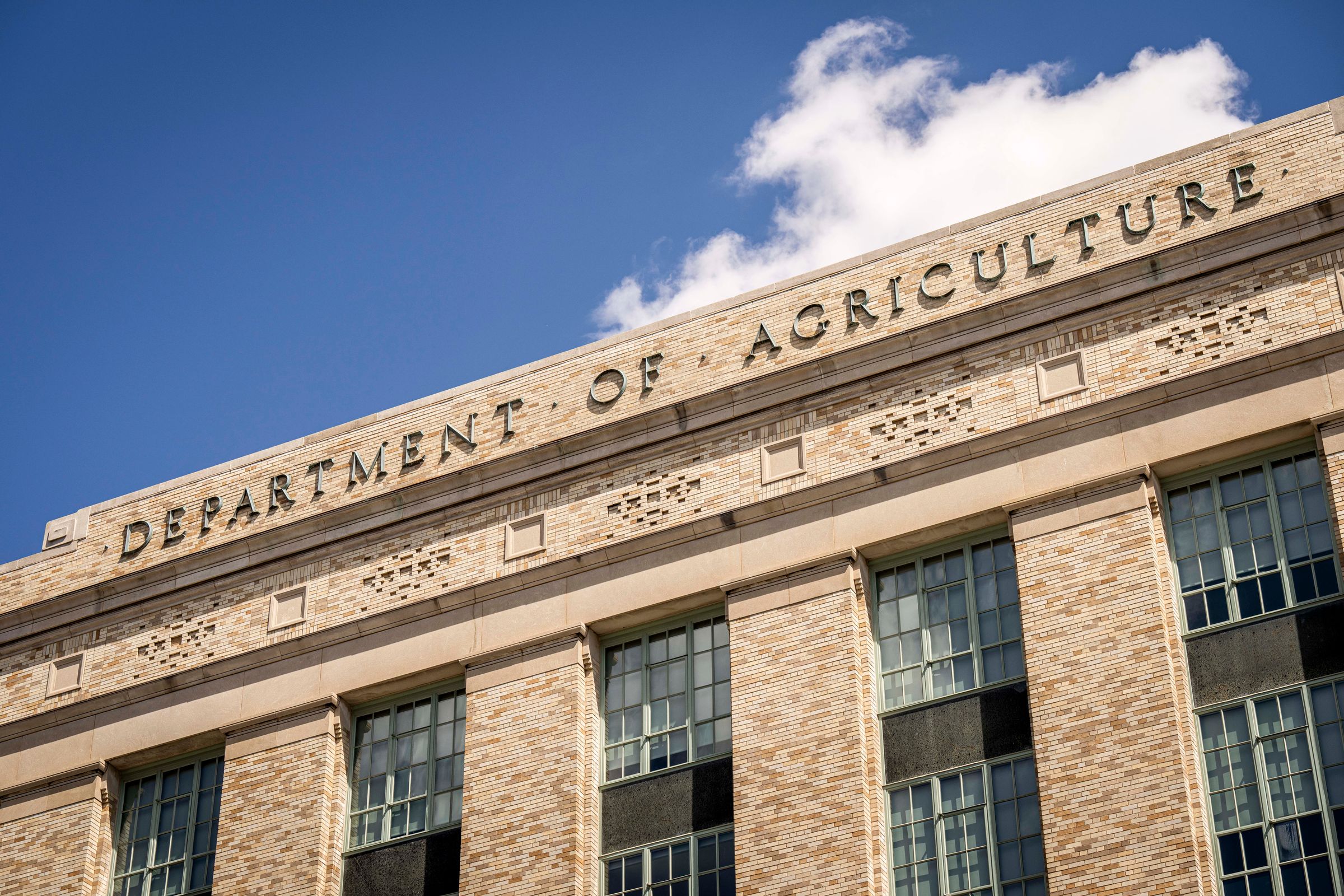
The Department of Agriculture has framed South Africa’s food security challenge as one of household access rather than national supply, anchoring the state’s response in a 2013 Cabinet-approved policy and constitutional obligations that government is now working to strengthen through a revised national plan.
The country remains broadly food-sufficient at the national level, with domestic agricultural production and imports keeping staple foods and other commodities available in markets. The gap, the department argues, lies at household level. Thulile Dlamini, the department’s Acting Director for Subsistence Farming, told SAnews.gov.za that access to food is shaped by poverty, unemployment, income inequality, hazards and food price volatility within an open, market-based food system.
The statistics underline the scale of the access problem. Statistics South Africa’s General Household Survey for 2025 found that about 15.8 million people experienced inadequate to severely inadequate access to food in 2025. That figure, tracked annually by the survey, marks an improvement from 16.3 million in 2023 and 15.9 million in 2024. Even so, the numbers make clear that national availability does not automatically translate into food security for every household.
The state’s mandate in this area rests on firm legal footing. Section 27(1)(b) of the Constitution guarantees everyone the right of access to sufficient food, while Section 28(1)(c) guarantees every child basic nutrition. Dlamini said these provisions place an obligation on the state to take reasonable legislative and other measures, within available resources, to realise these rights progressively.
The governing framework is the National Policy on Food and Nutrition Security, approved by Cabinet in 2013. It defines food and nutrition security as access to and control over the physical, social and economic means to ensure sufficient, safe and nutritious food at all times, for all South Africans, in order to meet dietary requirements for a healthy life. As recorded in the August 2014 Government Gazette, the policy is described as a broad framework for the fulfilment of this constitutional imperative, one that should guide national, provincial and local government in pursuing food security at every level.
How well that framework is working is reflected in the National Food and Nutrition Security Survey of 2023. It found that 63.5% of South African households were food insecure to some degree, and recorded a national prevalence of stunting, wasting and underweight among children aged 0 to 5 years of 28.8%, 5.3% and 7.8% respectively, alongside overweight and obesity rates of 25.3% and 32.1%. Dlamini attributed these outcomes mainly to the consumption of nutrient-poor diets, noting that undernutrition, hidden hunger, being overweight and obesity all form part of the country’s nutrition security situation.
The survey results, she said, have been used to target the worst affected districts during programme implementation, which points to the need for updated and continuous data to inform targeting. The department will conduct the National Food and Nutrition Security Survey every five years, relying in the intervening years on annual surveys such as the General Household Survey.
Accountability for the policy response sits with a coordinated national effort now being revised. The department is engaging provinces on the second iteration of the National Food and Nutrition Security Plan, which builds on the first iteration covering 2018 to 2023 and seeks to tackle malnutrition. Nutrition-related solutions are incorporated in all three goals of the second iteration, with the agriculture sector addressing the underlying determinants of malnutrition through improved food availability and accessibility, nutrition-sensitive agricultural support, promotion of diversified production systems, support for nutrient-dense and indigenous crops, and directing support toward vulnerable households and districts. Dlamini, who has participated in the provincial consultations, said they have solicited valuable inputs from a range of government and non-government stakeholders.
Lessons from the previous iteration carry direct implications for governance. The department concluded that legislative mechanisms are crucial for better coordination and collaboration and should be strengthened for the enforcement of the constitutional right to sufficient food. It also found that local contexts, including informal food sectors and urban food insecurity realities, must be considered, with Dlamini acknowledging that the centralised design of the plan restricts responsiveness to localised needs and emerging challenges.
Meanwhile, implementation support is channelled through programmes with defined budgets and reporting. At the tabling of its 2025/26 Budget Vote in May, the department announced a R3.2 billion allocation to food security and farmer support programmes. Backyard and community gardens are treated as important vehicles for increasing household food production, with support mechanisms including seeds, fertiliser, livestock and other agricultural inputs, technical support, mechanisation, production infrastructure, training, and linkages between producers and agricultural markets. These programmes are designed to move subsistence producers progressively toward smallholder and even commercial participation in agricultural value chains, where viable.
Smallholder producers are also being brought into formal markets through certification. The South African Good Agricultural Practices (SA-GAP) programme, implemented with the Perishable Products Export Control Board, had supported at least 740 producers, with plans to reach 1 700 more farmers in the coming year. The department is also running the Smallholder Horticulture Empowerment and Promotion Programme, which aims to help smallholder producers raise income through improved productivity, better management of group dynamics and embracing farming as a business. Public-private partnerships are being strengthened through the Agriculture and Agro-Processing Master Plan, focused on increasing production, including on under-utilised farming land, expanding export-led high value crops and investing in integrated value chains.
Food banks and community distribution networks, run by the Department of Social Development in partnership with public and private sector organisations, complement these efforts by collecting and redistributing food to vulnerable households and community-run feeding programmes.
The broader context is global. October marks both Food Security Month in South Africa and World Food Day, commemorated on 16 October since being proclaimed by the FAO Conference in 1979 to heighten public awareness of the world food challenge. Chapter 2 of the FAO’s State of Food Security and Nutrition in the World 2026 report records that at least 645 million people faced hunger in 2025, nearly one in 13 people worldwide. Dlamini warned that rising frequency and intensity of extreme climate events, economic downturns and price volatility make indigenous, science-based and financial innovations critical. With below-normal rainfall anticipated during summer, farmers were advised to wait for sufficient moisture before planting, prioritise drought-tolerant and locally adapted cultivars, monitor forecasts regularly, conserve water, and contact local agricultural offices for advice.
As Food Security Month draws to a close, the department’s message combines practical household measures, such as growing food in small spaces and sharing produce, with the institutional work of refining the national plan so that the constitutional right to sufficient food can be enforced more effectively. Whether the second iteration of the plan, with its promised attention to local contexts, can close the gap between national sufficiency and household access remains the open question for the year ahead.