President Cyril Ramaphosa has told an American audience that South Africa’s handling of its strained relationship with the United States will continue to run through official channels, with government prioritising engagement, transparency and the correction of what it regards as misinformation. He set out the position during a high-level working visit to the United States from 15 to 21 November 2026.
Speaking in Silicon Valley, California, in a moderated conversation with ABC News Chief Washington Correspondent Jonathan Karl, the President acknowledged that the deterioration in relations, which he described as a rupture, has had consequences that government is actively managing. “No doubt, this what you call a rupture has had an impact. It’s an impact that we are managing, and we’ve always said that relations between South Africa and the US are very important,” he said. The visit is aimed at strengthening economic and technological partnerships with the United States, including attracting investment and building cooperation with leading technology companies.
The accountability question at the centre of the discussion was the Oval Office meeting between President Donald Trump and President Ramaphosa earlier this year. President Trump presented material alleging that white South Africans were victims of genocide, and President Ramaphosa characterised the encounter as an ambush founded on misinformation. “I would like to think that that moment that took place in the White House, I regard it as an ambush, an ambush, and in many ways, I think it was based on him being misinformed because the video that he showed was not depicting South Africa. The press clippings did not depict South Africa, and I sought to point out to him that this is not my country, and in fact, did say that there is no white genocide in South Africa. We don’t do that. We would not do that anyway,” he said.
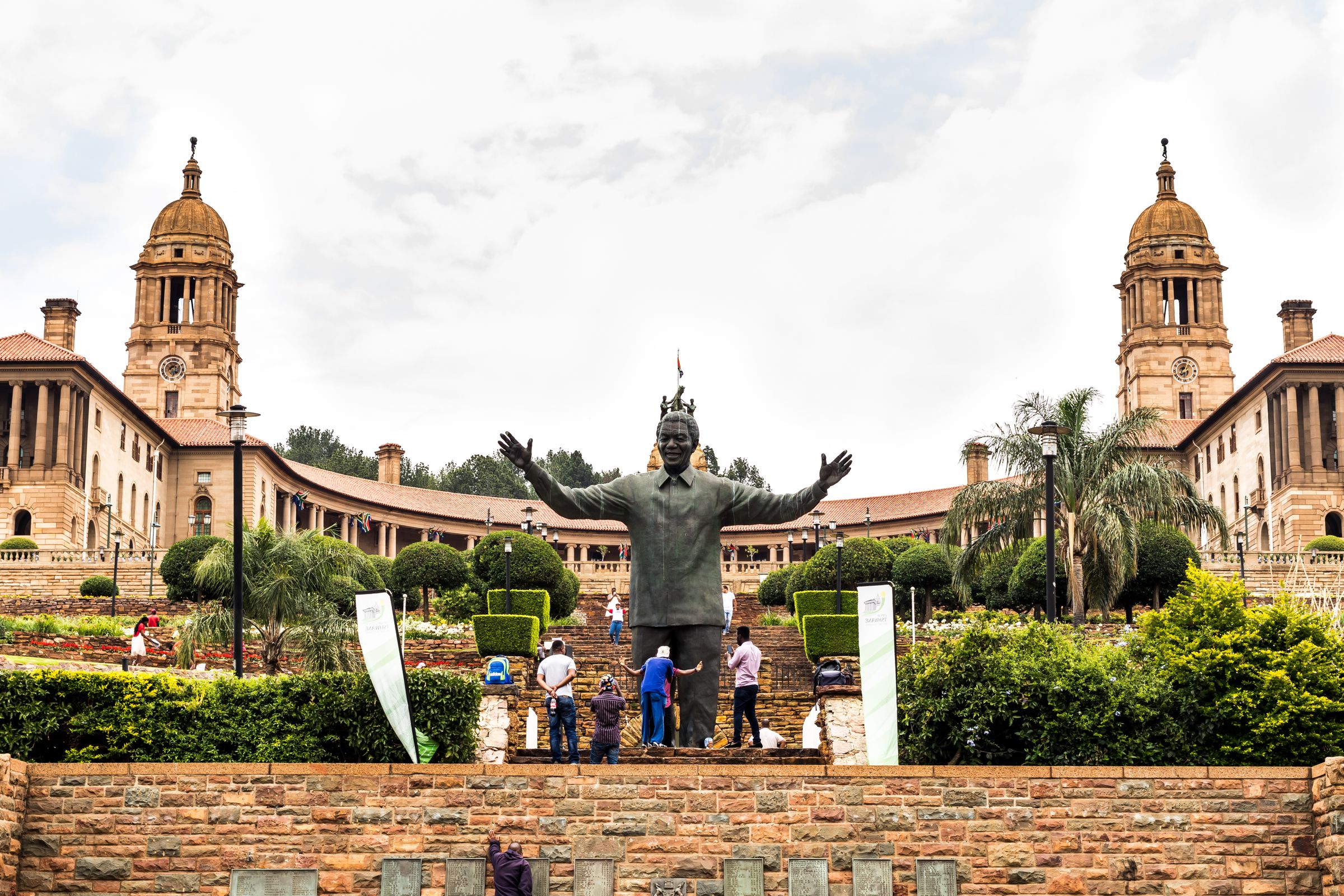
His rebuttal was anchored in South Africa’s constitutional order. He said the country’s democracy and commitment to human rights do not permit the targeting of any national group. “We are Nelson Mandela’s children, and we respect the human rights of everyone, black, white, everyone, and the constitution of our country would never allow us to do something like that. So, we never target any national group for either persecution or genocide. It will never happen in South Africa,” the President said. He added that the incident had contributed to an inaccurate understanding of South Africa and its policies in the United States, and that government had sought to engage Washington to correct the falsehood.
On policy substance, President Ramaphosa framed the United States as an indispensable economic partner, pointing to its position as the world’s largest economy and the significant number of South African businesses exporting goods and commodities to the American market. “The U.S. remains the largest economy in the world, and there are a number of our businesses that export commodities and products to the United States, so it is good for South Africa to have good relations with the US on the basis of mutual respect and a basis of being prepared to deal with each other fairly and transparently,” he said. Disagreements, he argued, should be resolved through engagement and a willingness to find common ground, with respect for multilateralism underpinning international relations.
Meanwhile, on direct contact between the two leaders, President Ramaphosa confirmed they had not spoken since the White House encounter, although they had conversed easily beforehand. He said he had placed a call to the American President ahead of the current visit and believed he was simply too busy to respond, noting that he often takes his calls and that the two leaders chat now and again. He said it was appropriate for heads of state to inform their counterparts when visiting each other’s countries. Further detail on the state of the relationship can be found at https://www.sanews.gov.za/south-africa/south-africa-us-relations-must-be-based-mutual-respect-president-ramaphosa.
The conversation also turned to South African-born technology entrepreneur Elon Musk, who has criticised the government’s transformation and empowerment policies and described them as “apartheid 2.0”. President Ramaphosa said he believed Musk did not fully appreciate the historical impact of apartheid on black South Africans, comparing the resources allocated to their respective educations. “When the party government spent 12 rand on his education, he spent one rand on my education. So, if one does not understand that one will never be able to understand precisely what needs to be done to remedy the harm that was done,” the President said. He said Musk’s success was partly rooted in the education and opportunities he received in South Africa and urged him to give back by contributing to the country’s development.
By contrast with the personal framing, the regulatory question was firm. Asked about the prospect of Musk’s satellite internet service, Starlink, operating in South Africa, President Ramaphosa confirmed that discussions had taken place but stressed that the matter remained subject to the country’s regulatory framework. “And all countries have policies in terms of how they admit companies to operate. The United States has the same; it has its own policies. And when you want to come and operate here, you’ve got to subscribe to the policies of the country,” he said. Whether Washington’s response to that framework, and to Pretoria’s engagement, begins to shift the relationship remains the open question hanging over the visit.