South Africa’s next investment test is written in numbers: R1.5 trillion pledged since 2018, but only R634 billion (US$38.2 billion) actually in the economy by March 2026, roughly 42% of commitments. That shortfall between promise and delivery now frames the government’s R3 trillion target, about US$181 billion, for 2026 to 2030, aimed at energy, mining, infrastructure, manufacturing and green industries.
The programme opened with strong momentum on paper. The sixth South Africa Investment Conference, held in March 2026, secured a record R889.8 billion (US$53.6 billion) across 81 projects, nine provinces and 22 source markets, with more than 230,000 permanent jobs expected from the announced projects. Of that, R415 billion (US$25 billion) was confirmed fixed investment and R474.8 billion (US$28.6 billion) came from development-finance institutions. The government then raised its ambition to R3 trillion, reflecting a judgment that sustained flows, not individual flagship projects, are what the economy needs.
The delivery challenge is well understood inside the programme. Large infrastructure projects must clear bankable feasibility studies, environmental approvals, grid or network-access agreements, land rights, offtake contracts and financial close before capital moves. A delay at any stage raises construction costs and weakens investor returns. In response, the government is strengthening project monitoring, commitment verification and annual reporting, and says successful delivery will depend on regulatory certainty, faster approvals, reliable electricity and logistics, transparent procurement and effective public-private partnerships.
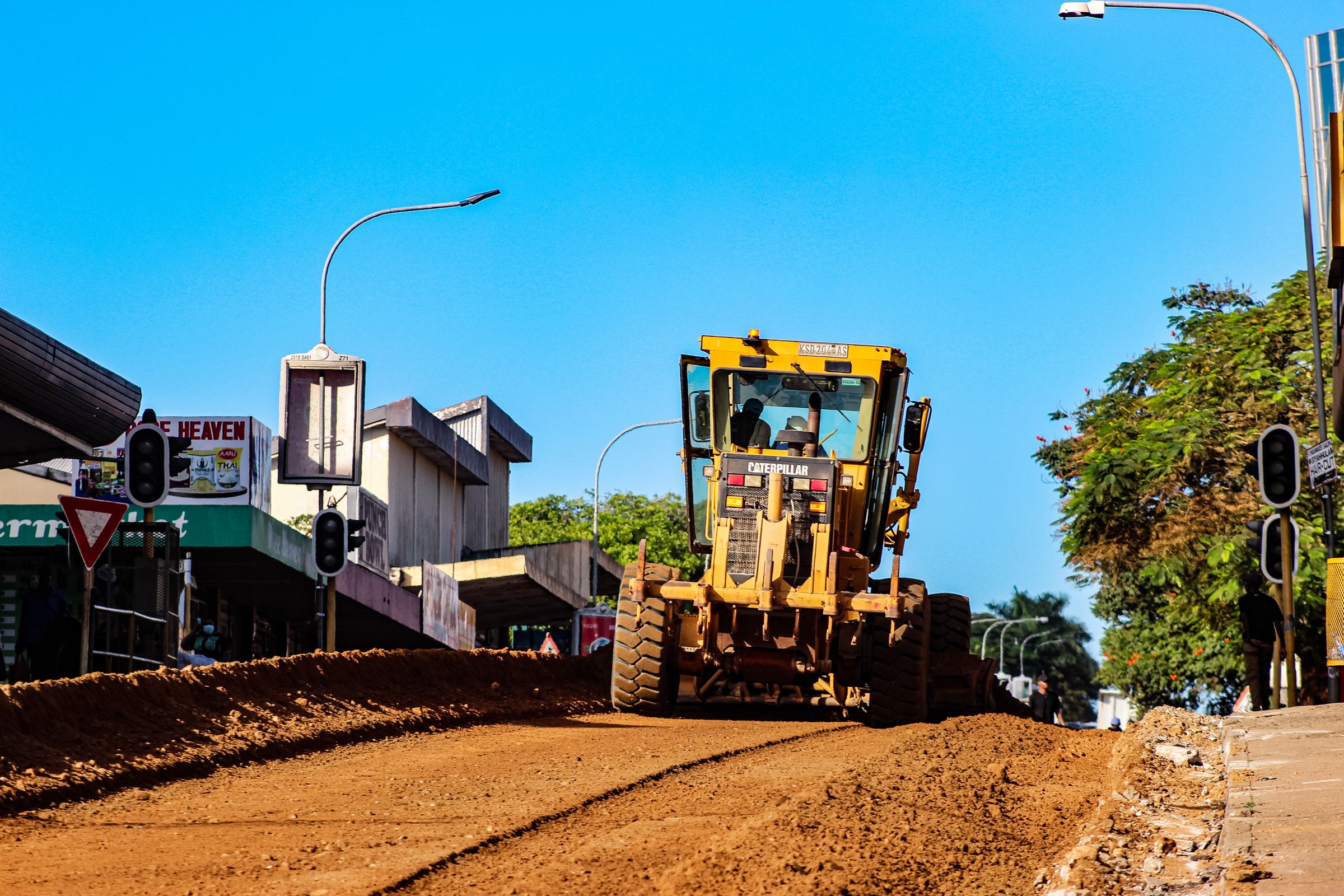
On the ground, the pipeline concentrates on the systems that have historically constrained the economy. Public-sector infrastructure expenditure is estimated at approximately R1.07 trillion (US$64.5 billion) over the next three years, covering electricity, roads, rail, ports, water and other strategic assets. SANRAL plans roughly R300 billion to R400 billion (US$18.1 billion to US$24.1 billion) for national roads and strategic freight corridors. Transnet has identified up to R250 billion (US$15.1 billion) for ports and logistics modernisation. Ports and rail carry particular weight because mining and manufacturing depend heavily on efficient freight networks, and improving them could ease bottlenecks and strengthen South Africa’s role as a regional trade gateway.
Energy delivery shows both progress and the scale of remaining work. Reforms and additional generation have substantially improved electricity reliability after years of shortages, and regulatory changes have helped unlock a renewable-energy pipeline exceeding 220 GW, with approximately 36 GW already in the grid-connection process. Confirmed renewable-energy investment at the 2026 conference amounted to about R29 billion (US$1.75 billion). The largest single engineering task is transmission: approximately 14,000 kilometres of new lines, estimated at R450 billion (US$27.1 billion). A Credit Guarantee Vehicle is being developed to reduce investor risk and draw private capital into transmission projects, while the transition is also opening work in green hydrogen, battery storage, electric vehicles and renewable-energy component manufacturing.
Meanwhile, mining strategy is shifting toward beneficiation, meaning more domestic processing and value addition of platinum-group metals, manganese, chromium and other critical minerals whose global demand is being reshaped by electric vehicles, renewable energy and batteries. The financing need is large. A joint Development Bank of Southern Africa and World Bank study puts the country’s infrastructure financing gap at approximately R13 trillion (US$783 billion), meaning government budgets alone cannot cover requirements and private capital must play a far bigger role.
Funding sources are being assembled accordingly. Beyond the development-finance institutions’ R474.8 billion in conference commitments, the African Development Bank has committed R20.5 billion (US$1.2 billion) for 2026/27, the Afreximbank investment facility is anchored by R176 billion (US$10.6 billion), and the New Development Bank has indicated approximately R34 billion (US$2.0 billion) for 2026/27. Government estimates development-finance commitments could mobilise between R393 billion and R786 billion (US$23.7 billion to US$47.3 billion) in additional private investment. The European Union and South Africa concluded a €12 billion (approximately US$14 billion) Clean Trade and Investment Partnership covering the just energy transition, infrastructure, skills and pharmaceutical manufacturing. South Africa issued its first sovereign infrastructure and development-finance bond in 2025, raising R11.8 billion (approximately US$711 million), and in July 2026 the World Bank approved a US$1.5 billion Development Policy Loan supporting reforms in electricity, freight transport, and water and sanitation as budget support.
The strategy rests on decarbonisation, digitisation and diversification, positioned as the central mechanism for expanding productive capacity, creating jobs and offsetting high unemployment and slow growth. Structural reforms have already improved conditions in electricity supply and logistics. Whether the US$181 billion ambition becomes a measurable expansion of the economy will depend on execution: converting a pipeline of commitments into functioning power plants, mines, factories, transport corridors and digital infrastructure, on time and at cost.