Callum Dreyer took up rowing 15 months ago. On Tuesday in Dakar, he won gold in the coastal beach sprint at the Youth Olympic Games, sprinting across the sand, jumping into a boat, rowing out to sea and returning to shore first. His was one of three golds in Team South Africa’s record haul of 11 medals, three gold, five silver and three bronze, the country’s best result at the Youth Olympics yet. The previous benchmark stood at nine medals, set in Singapore in 2010. The Games carried historic weight as the first Olympic competition ever held on African soil, and the South African contingent performed as though the event were a home fixture.
Each gold came from a different discipline, and each winner delivered under pressure. In athletics, Matao le Roux cleared 2.16 metres to win the high jump. Megan Nieman won the 400m hurdles after nearly falling at the final barrier, then chasing down Switzerland’s Mina Hirsbrunner and winning by less than a tenth of a second.
The silvers were spread across the pool, the field and the pitch. Leah Markgraaff took second in the 400m freestyle, the country’s first medal of the Games. Chanel Veldsman finished second in the 100m breaststroke. John-Pierre Theron medalled in the hammer throw, Milan Blignaut in the high jump, and the boys’ rugby sevens team lost a tight final to France.
Bronze went to Veldsman again in the 200m breaststroke, making her the team’s first double medallist, to Darius Botha in the shot put, and to Enrique Bosch in the 110m hurdles, who reached the podium despite a faulty starting block. Taken together, the spread across swimming, athletics, rowing and rugby sevens points to strength in a wide range of events for South African Olympic sport in the years ahead.
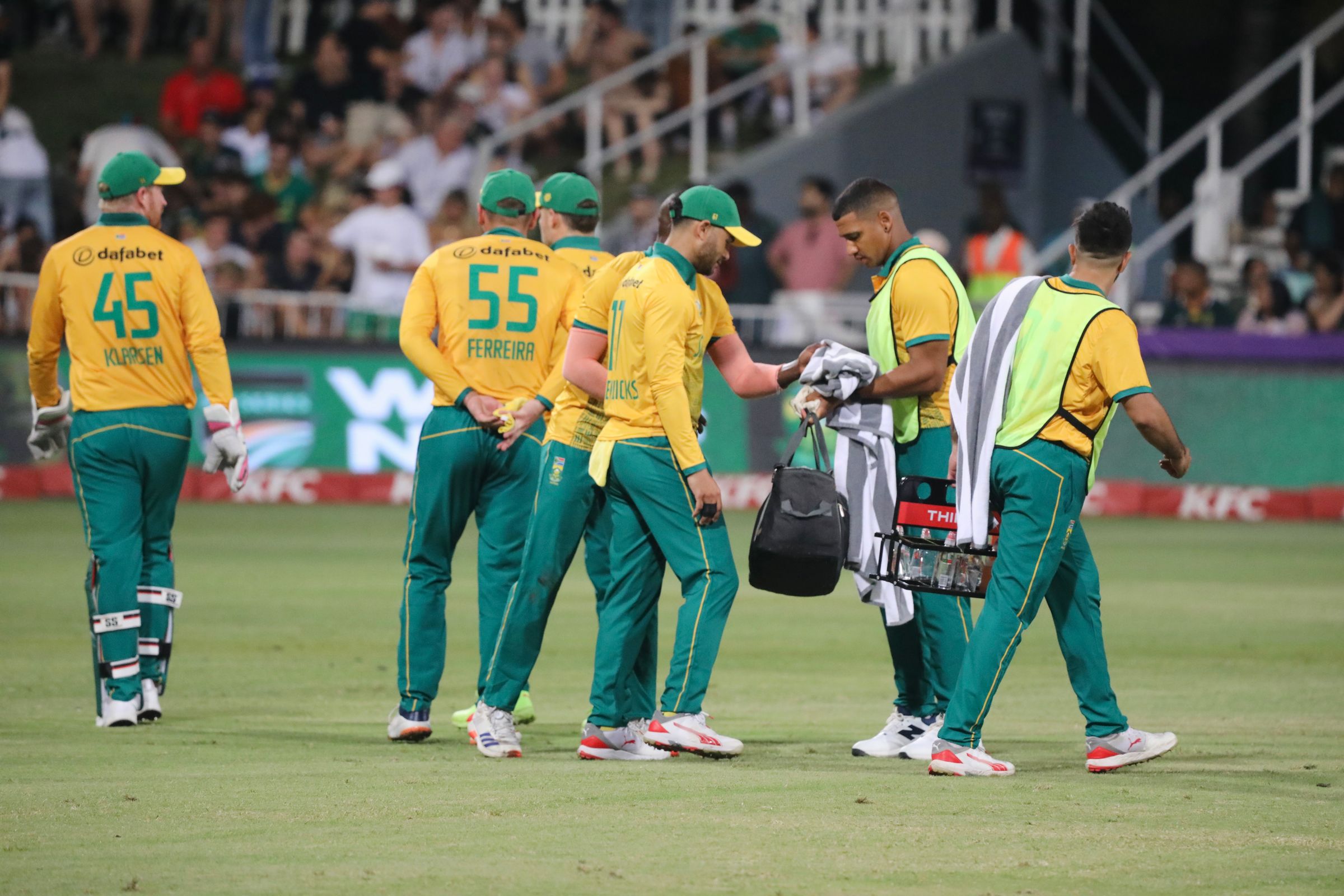
Meanwhile, the senior national teams now carry the load, with their schedule packed into a single weekend. On Friday at 18:00, Bafana Bafana host Kenya at Orlando Stadium in the first leg of their AFCON 2027 qualifier, with Benni McCarthy, himself South African, coaching the visitors against his own country. Later that night, at 22:10, the Springboks face France at the Stade de France. The standings add stakes: South Africa sit level with the All Blacks on 20 points in the Nations Championship but hold a 67-point advantage on points difference. If South Africa lose one of their last two matches and New Zealand win both of theirs, the All Blacks go to the final.
The weekend does not stop there. On Saturday at 15:00, Amaglug-glug play Madagascar in Atteridgeville in the first leg of their Olympic qualifier for LA 2028. On Sunday at 10:00, the Proteas begin their first Test against Bangladesh at the Wanderers. Four teams across three days, with kick-offs and start times that will demand a charged television, a stocked fridge and a pardon to the family until Monday.
There is a sadder note to close the week. Tatjana Smith, the country’s most decorated Olympian ever, will now swim for the Netherlands. Whatever the reasoning behind the move, the sentiment offered to her is one of understanding and continued support: she will be cheered every time she dives into the pool.
For the young medallists from Dakar, the delivery is complete and the standard is set. For the senior sides, the work starts on Friday evening, and the country will be watching to see whether the momentum holds.