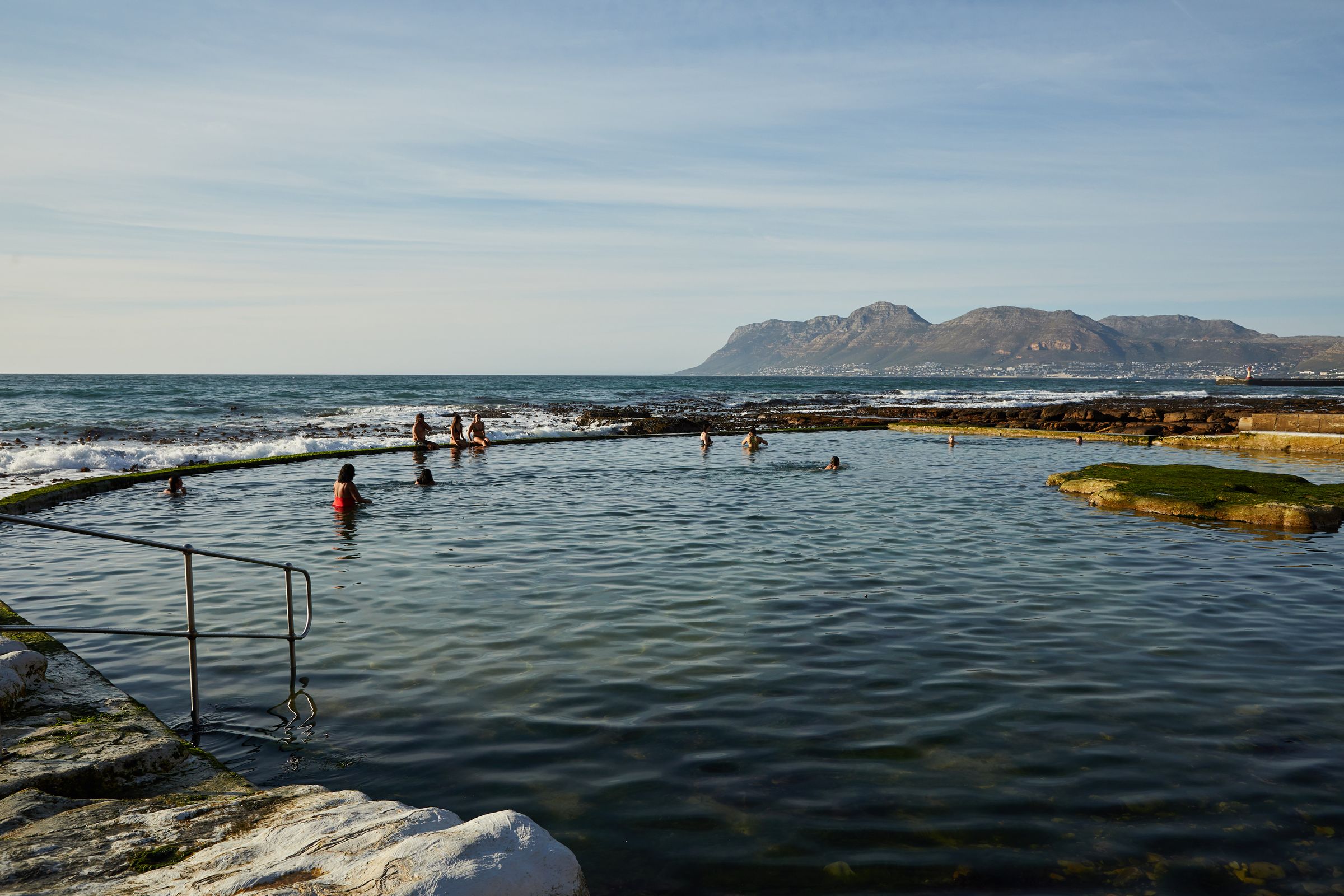
Only 13 of Gauteng’s 52 municipal swimming pools will be open this summer, Swimming South Africa’s acting president Zikie Molusi has told MPs, a shortfall that leaves ordinary communities across the province with sharply reduced access to the water in the months when people need it most.
The admission came as the federation appeared before parliament’s sport, arts and culture portfolio committee, where lawmakers pressed the federation and the department it answers to on broken promises and strained finances.
At the centre of the session was an apology to a national athlete. SSA said sorry on Tuesday for withholding prize money owed to Tatjana Smith, who won silver in the 100m breaststroke at the 2023 world championships in Fukuoka. The federation had held back the $35,000 she earned because she wore the costume of her personal sponsor, Speedo, rather than that of the federation’s sponsor, Arena. Only after receiving legal letters did SSA repay the money, along with R75,000 in interest.
“We believe that this issue could have been better handled,” Molusi said. “I will take the opportunity to tender the apology to the athlete and her management, including her coach and the country at large.” He said the federation would re-examine athletes’ contracts, adding: “The proof will be in the pudding when we submit our report to the committee in the next 14 days.”
The committee also probed the governance of the federation itself. There were no further details on the provisional suspensions of SSA president Alan Fritz and CEO Shaun Adriaanse by the World Aquatics integrity unit in August. Deputy director-general Vincent Campbell of the department of sport, arts and culture (DSAC) said government officials had recently met a World Aquatics executive member in Switzerland and been told the process would take five months.
The sharpest exchanges concerned the Franschhoek high-performance project, a building venture funded in part with public money. Matsholo Mmolotsane of the ANC told the committee she had visited the site, located at a local school, and found no sporting facilities for the children, no contractor, and a pool she described as “full of frogs”. She rejected SSA’s claim that the project was half complete. “They have come here and lied. That report of 50%, I’m not taking it,” she said.
The Special Investigating Unit has opened an investigation into the Franschhoek debacle, but Molusi expressed confidence that the matter would be wrapped up and Lotto funding would resume, saying it “should be up and running at the latest by the end of 2027”.
Money, and how it reaches federations that serve the public, ran through much of the questioning. Eugene Mthethwa of the EFF criticised the government for paying over money to federations several months into the financial year. Campbell responded that 63 federations received government grants last year, but that only 46 applications had been received so far this year. MPs also accused DSAC of failing to use targets in its funding agreements with national federations.
SSA’s own books came under scrutiny too. Its latest financial statements showed a deficit of R611,000, up from R465,000 the previous year, a gap Sithembile Nkosi of the MK party questioned directly. Treasurer John Ellis said austerity measures had been in place for a few years already, and that the federation would have been in a healthier position had it not been for the Franschhoek project.
The annual report also listed two contingent liabilities. One was Franschhoek, with a warning that the remaining R27.63m “may be at risk of nonpayment”, which would leave SSA out of pocket for money already spent. The other was a R7.2m lawsuit brought by two artistic swimmers against the federation, which Mmolotsane said had not been properly disclosed. Ellis countered that the matter had been disclosed as a contingent liability, though the report did not state the amount involved.
For a federation dependent on public support, the arithmetic remains tight. SSA is set to receive R3.3m from DSAC this year, but Ellis told the committee it would need R10m to turn around. Whether that gap closes before next summer, when communities across Gauteng again face a season with most of their pools shut, is the question now hanging over both the federation and the department.