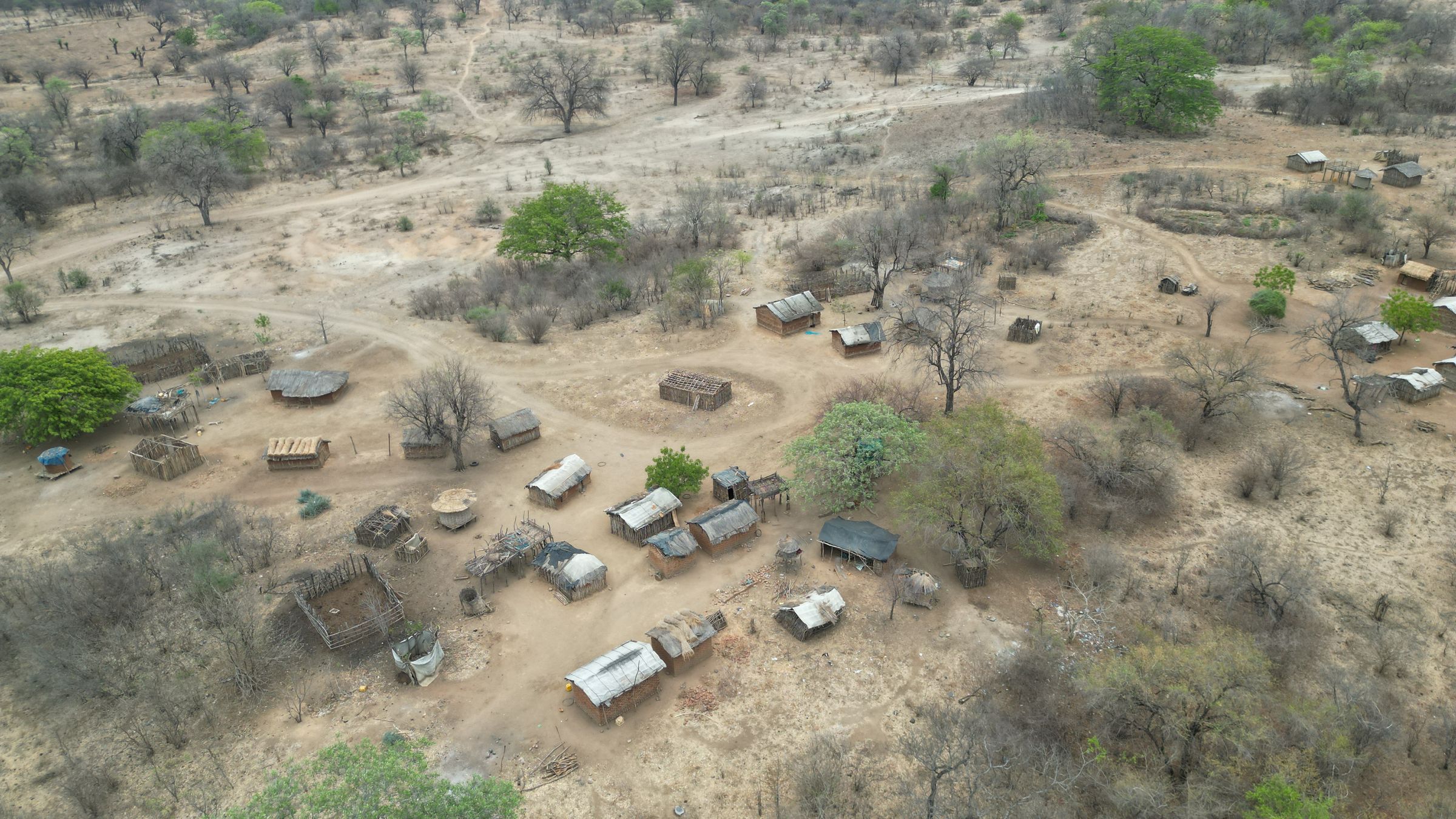
For families in Cabo Delgado, the past several years have meant flight, fear and the loss of any ordinary rhythm of life. From the end of 2017, the northern and eastern parts of Mozambique’s northernmost province became the stage for violent conflict when armed insurgents, mainly local youths with links to Tanzania and Kenya, unleashed a series of attacks in coastal areas with a higher Islamic concentration. The group, known locally as ‘Mashababos’ or Al Shabab, has no known or established connections with the Al Shabab active in Somalia and Kenya. Its stated aim was to establish an Islamic caliphate in the region, and the result has been mass displacement and a growing humanitarian crisis in a province that is also home to vast gas reserves.
The people caught in this violence live at the edge of a wider regional dilemma. Mozambique shares borders with five other SADC member states: Swaziland, South Africa, Zimbabwe, Zambia and Malawi. Four of those six neighbours are landlocked and depend on Mozambique as a gateway to global markets, so instability in Cabo Delgado threatens trade routes that sustain livelihoods far beyond the province. The conflict has also raised concerns about maritime security in the Mozambican Channel, a coastline already strained by trafficking, illegal fishing and the potential resurgence of piracy.
Scholars have offered several explanations for why the insurgency took root. One school of thought points to grievance: poverty and the frustration of social expectations among local youths tied to the exploitation of natural resources. Another identifies historical ethno-linguistic conflicts between coastal and inland peoples. A third emphasises regional dimensions, noting links between the insurgency and terrorist cells in East Africa, including Somalia, Tanzania and Kenya. A final hypothesis highlights the confluence of international, regional and local economic interests in the Mozambique Channel, connected to a lucrative energy corridor and to illegal drug, timber and ivory routes. Together these accounts underline how violent extremism, organised crime and local conflict intertwine in Cabo Delgado.
The regional response arrived late and unevenly. Mozambique, historically averse to external involvement in its domestic affairs, first denied and downplayed the conflict, described the violence as banditry rather than terrorism, and moved from heavy-handed but inadequate policing to military force quietly backed by private military contractors, including Russia’s Wagner Group, South Africa’s Dyck Advisory Group, and a consortium of Paramount Group and Dubai-based Burnham Global. Only on 23 June 2021 did an Extraordinary SADC Summit in Maputo approve the Southern African Development Community Mission in Mozambique, SAMIM, which deployed on 15 July 2021 after Maputo signed a Status of Forces Agreement. The mission, created under the SADC Mutual Defence Pact at the invitation of the Mozambican government, drew troops and personnel from Angola, Botswana, the Democratic Republic of Congo, Lesotho, Malawi, South Africa, Tanzania and Zimbabwe. Its mandate covered neutralising the terrorist threat, restoring law and order, providing air, maritime, logistics and training support to the Mozambican armed forces, and helping humanitarian agencies assist displaced people.
Rwanda moved faster. On 9 July 2021, following a bilateral deal between the presidents of Mozambique and Rwanda, Phillip Nyuse and Paul Kagame, Kigali deployed 1,000 military and police personnel. The Rwanda Defence Force took the lead in the districts of Palma and Mocimboa da Praia and re-occupied part of Mocimboa within weeks. Analysts judge the Rwandan mission more effective than SAMIM, whose slow deployment exposed deep divisions within the regional bloc and raised questions about the hierarchy and status of its member states in responding to intrastate conflicts.
Meanwhile, other external actors followed. In October 2021 the European Union established the European Training Mission in Mozambique, focused on military and specialised counterterrorism training, protection of civilians, international humanitarian law and the Women, Peace and Security agenda, and contributed 2 million euros to AU support for SAMIM. SAMIM itself received 1.9 million euros from the EU under the AU African Peace Facility Early Response Mechanism, funding capacity building for Cabo Delgado’s police and correctional services and attention to human rights, including the treatment of child recruits and terrorist prisoners. The United Nations, meanwhile, appointed Mirko Manzoni of Switzerland in July 2019 as Personal Envoy for Mozambique to facilitate dialogue between the government and RENAMO.
A fuller analysis of these interventions, drawing on a qualitative study of terrorism, counterterrorism and regionalism, is available at https://www.accord.org.za/ajcr/regionalism-and-the-fight-against-terrorism-in-southern-africa-reflections-on-cabo-delgado-in-mozambique/. Its conclusions are sobering but not without hope. SAMIM, despite obstacles, represented a step in the right direction, and building durable security institutions is the starting point for genuine regional security cooperation, which in turn underpins feasible economic integration.
The deeper lesson concerns people rather than instruments. The security situation in Cabo Delgado cannot be separated from the human development disparities prevailing in the region, disparities that helped the insurgency take hold. If interventions remain purely reactive, the conflict will find deeper traction among disaffected groups, mainly the youth. The study recommends that support to Mozambique follow the terms its government requests, particularly logistics and training, with diplomatic pressure for transparency; that SADC consider a joint peace and security summit with the East African Community and ECCAS given the insurgency’s straddling of regions; and that Mozambique embrace a multidimensional, human security-centred approach, working with local communities and humanitarian workers, aligning prevention of violent extremism with countering it, and undercutting the localised financial supply chains that fund the insurgency. Only such a holistic understanding, addressing peace, development, capacity building, education, basic infrastructure and unemployment, is likely to restore full sovereignty in Mozambique and reclaim a state fully in charge of its territory.